Case Studies
Drone-based Solar Panel Cleaning
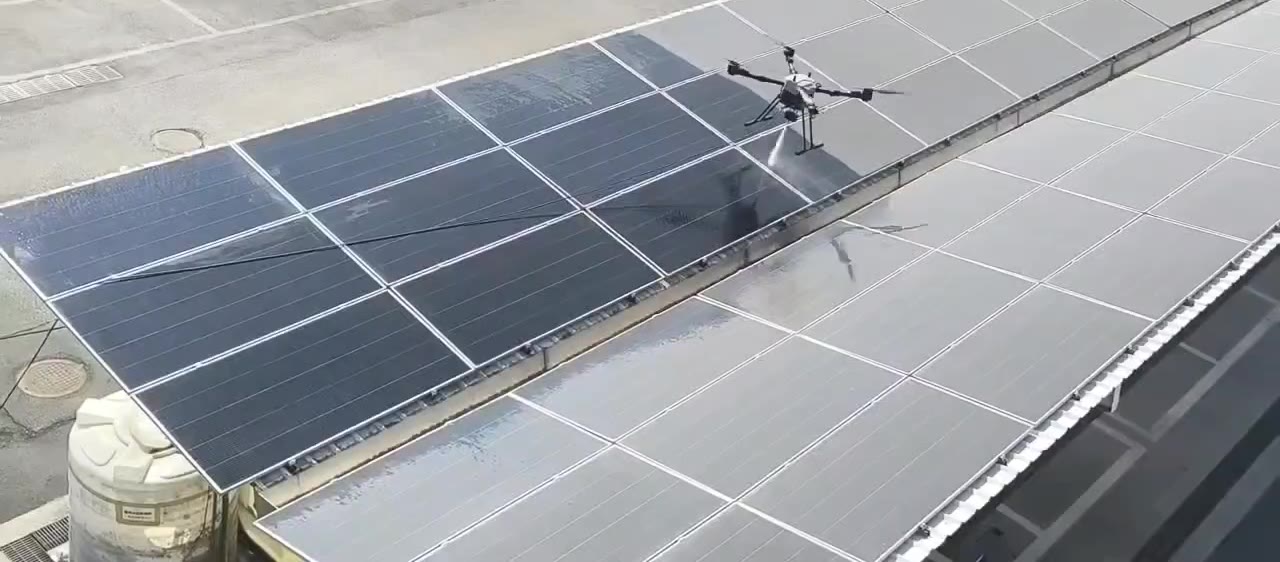
A drone carrying a spray head, tethered to a ground water supply, cleaning a rooftop solar array.
What we looked at first
On rooftop sites the problem is not the cleaning. It is having people on the roof at all. So the first question we asked was whether anyone needs to go up there, not how to wash more thoroughly.
Tethered water supply is the answer to that question. With no tank aboard, the weight and endurance limits loosen; the cost is that working range is bounded by hose length. That trade holds on rooftop sites. On large ground-mounted farms it may not.
Why cleaning matters
Dust on solar panels eats directly into output. Rooftop sites in Taiwan have a second problem: humidity and bird droppings let moss and algae take hold between the cell grid lines, and rain does not wash that off.
The conventional approach sends people onto the roof to drag a hose and scrub panel by panel. The roof pitch, the wet panel surface and the microcracks that footsteps can cause are all risks at once.
How we do it
We spray from a drone. Nobody goes onto the roof.
The aircraft carries the spray head A quadcopter hovers low over the panels and directs a pressurised jet downward.
A tether supplies the water Water is pumped from ground-level storage up a hose to the aircraft. This is the design that makes it work. If the aircraft had to carry its own water, the payload would destroy endurance and the area covered per flight would be tiny. Tethered, the working time is limited only by the supply on the ground.
Flying close to the surface The aircraft holds a low altitude above the panels so the jet retains enough force to lift what is stuck to them. That calls for stable hovering on a rooftop, where GPS support is often marginal.
What the video shows
The first segment is the wide view of the work in progress. You can see the jet leaving the underside of the aircraft, the supply hose trailing behind it and, most tellingly, that the panels the aircraft has already passed are dark and wet while those ahead of it are still pale and dusty. The progress line is visible in the frame.
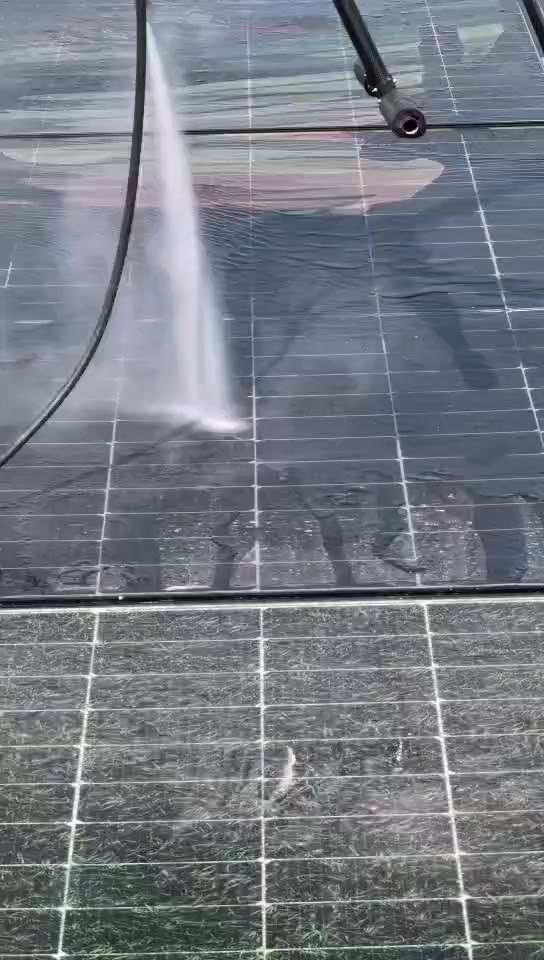
The second segment is shot close in. Green growth is clearly visible between the grid lines on the unwashed panels, and the surface returns to clean dark glass as the jet sweeps across.
Before and after
More detail
Site scale, throughput and pricing are quoted after assessing the conditions on site. Please get in touch through the contact form.